Overview
Cinderbatch explores the relationship between recorded roast profiles and the observations that explain a batch. A chart-centered workspace provides visual comparison, while lot records and a sensory journal preserve source context and tasting notes. Charts and values are illustrative; the concept is a record-keeping interface rather than machine control or a roasting recipe.
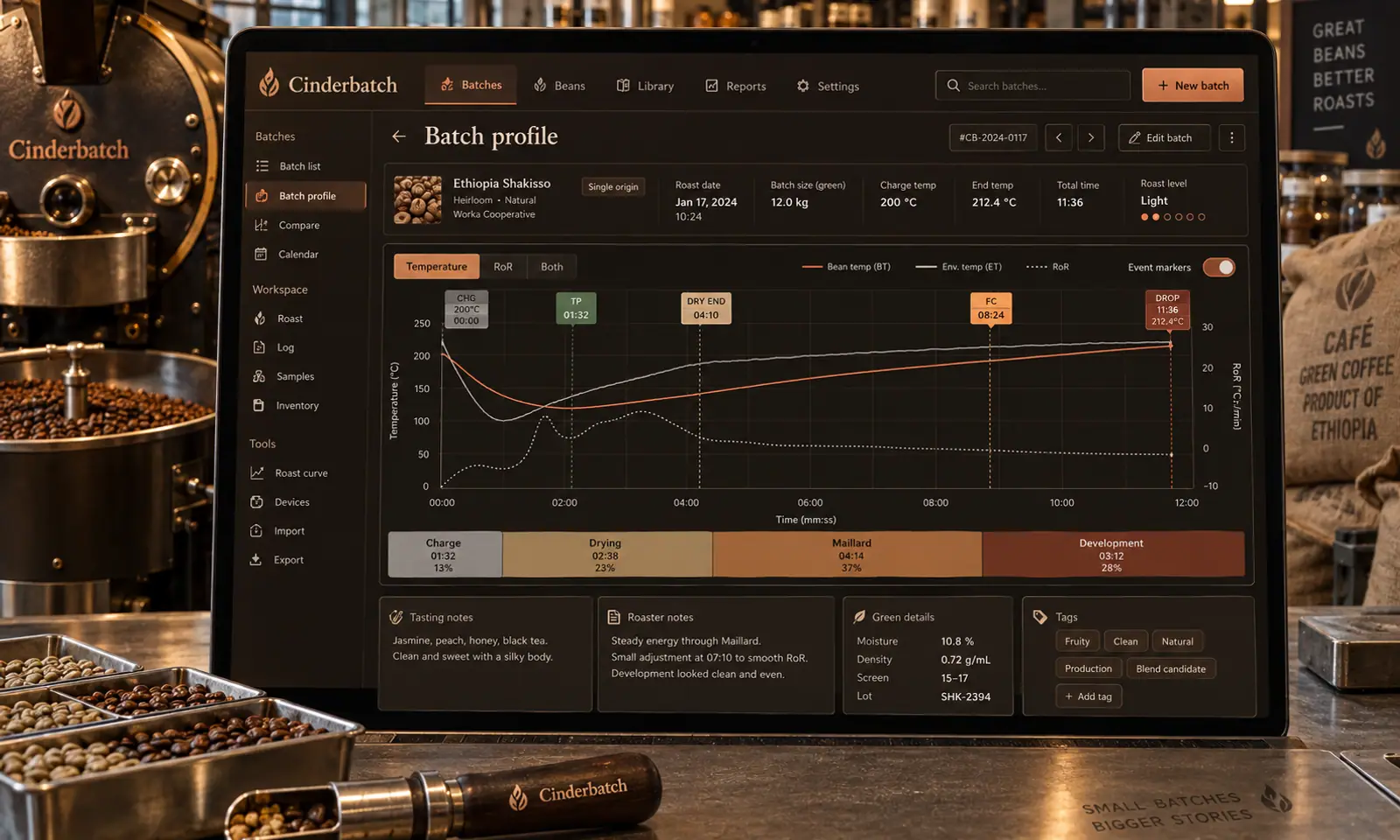
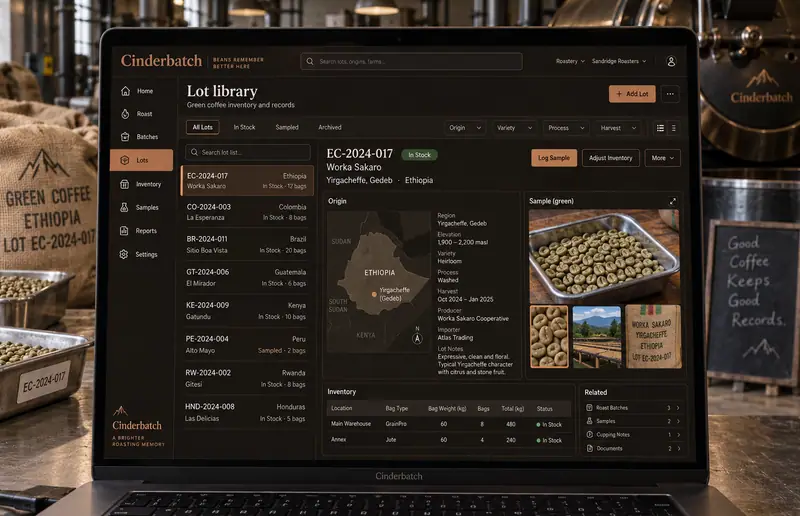
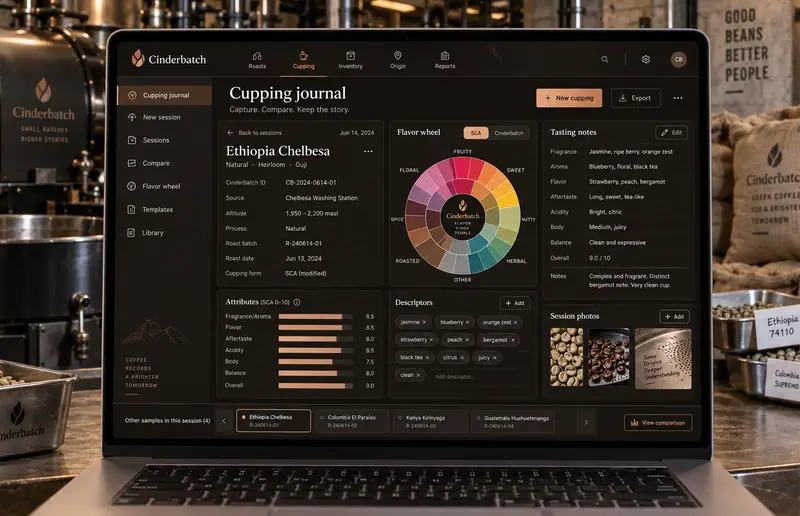
Original coffee roasting record keeping interface concepts. Records, imagery and technical values are illustrative.
Challenge
A curve alone does not explain a batch. Roasters also need the lot reference, event notes and sensory observations, and those details can be scattered across logs and tasting sheets.
- Keep recorded profiles connected to lot information.
- Compare batches without losing their individual notes.
- Make sensory observations easy to retrieve alongside a batch.
Solution
The core workspace centers on a large profile plot and bottom batch strip. Lot information uses an editorial record, tasting notes use a structured journal and comparison overlays selected profiles with clear record references.
- Inspect an illustrative batch profile with event markers and contextual notes.
- Review a coffee lot through origin context, sample imagery and inventory references.
- Record sensory observations in a structured journal with a flavor reference.
- Compare illustrative profiles while retaining each batch's notes and identity.
Results
4
Specialized
concept views12
Proposed
feature areas